
L’océan plein, la tempête et les piverts, très grand très loin, radieuses des voiles bombées. Un vent durable, persistant – 2023 – Festival Sculptures en île (Sculptures on the island), Andrésy, Nancy island – COAL curator, Lauranne Germond & Sara Dufour – Artwork-catamaran and performance.


© Sara Favriau, Malo Legrand, Qiang Liu
Teaser :
(english below)
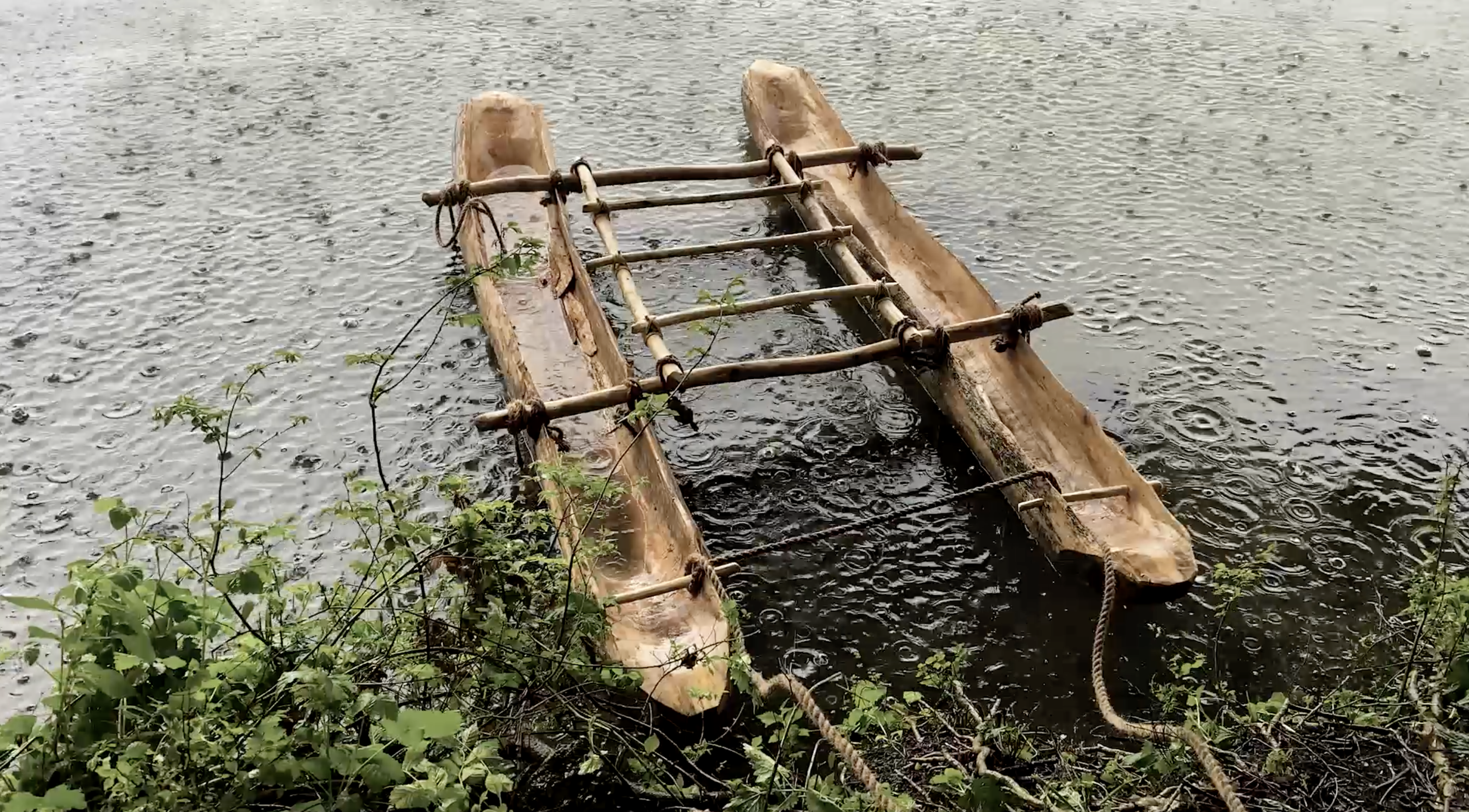
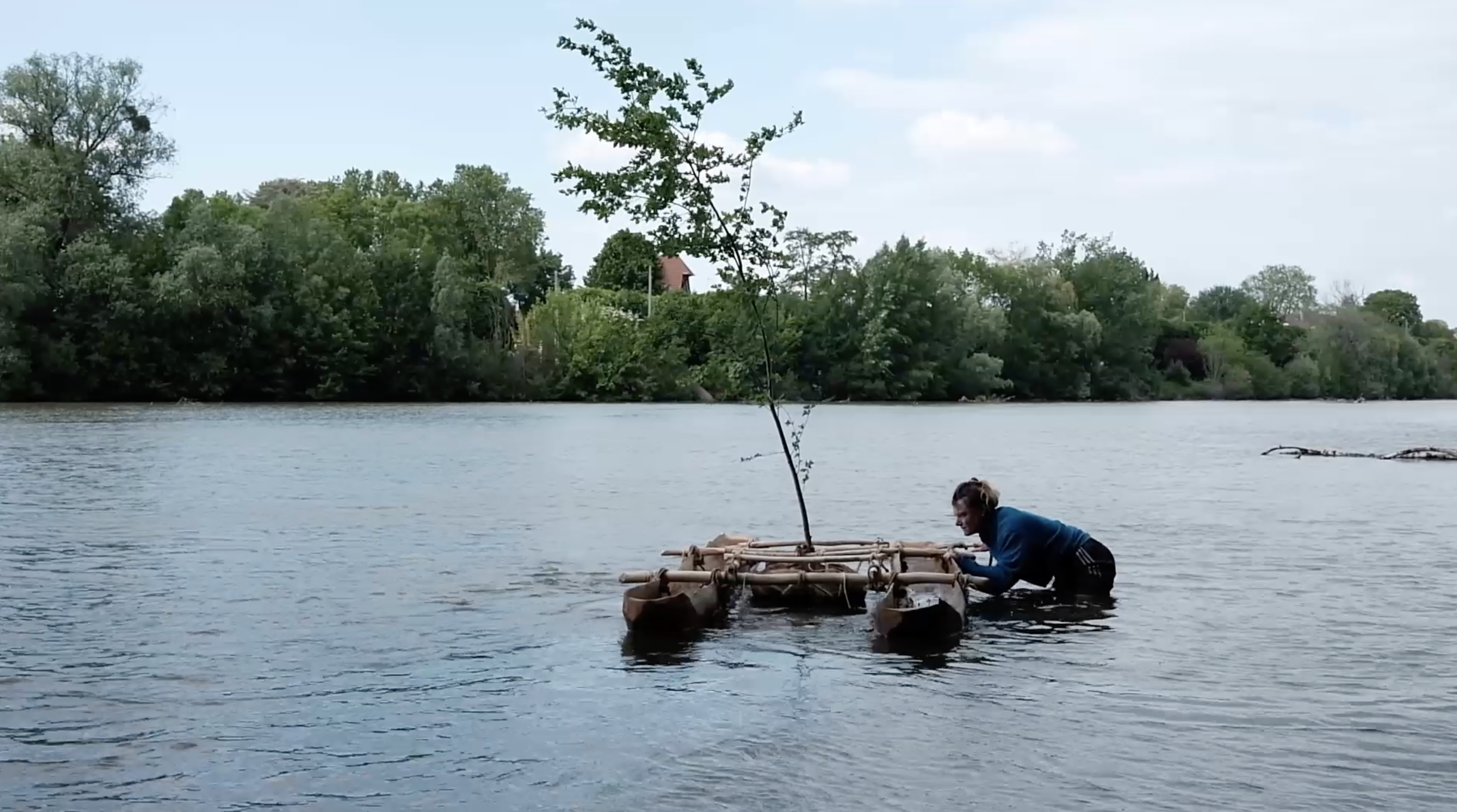
Deux érables dépéris de l’île Nancy se transforment en pirogue-catamaran. Une embarcation qui devient le socle d’un arbrisseau, un sureau, dont les racines affleurent la Seine pour s’abreuver. L’esquif gréé de cet arbuste vivant, a navigué : les feuilles de ce sureau sont la voilure, et son tronc est le mât. Les deux coques, le trampoline qui les joint, et l’arbrisseau, proviennent tous de l’île. Les grumes d’érable (coque), le sureau (mât et voile), sont deux générations de ligneux qui s’accompagnent : une manière de régénérer, faire revivre les érables tombés au sol, emportés sur le fleuve par l’arbrisseau. Après navigation, l’arbrisseau démâté a été replanté, entouré de ses congénères de l’île Nancy – Érable, Sureau, lin et chanvre – Catamaran de 3 x 2 m.
Créer cette oeuvre-pirogue, c’est hybrider deux arbres. L’un s’hybride en une coque, lorsque l’autre s’hybride en mât et en voile. Ces transformations mettent en relation la Nature à la Culture. Cette oeuvre itinérante, convoque plusieurs cultures et symboles à travers plusieurs temporalités : 1 / les pirogues sur l’Oyapock (fleuve qui traverse la Brésil et la Guyanne), qui équipent encore parfois leur embarcation avec un jeune arbre. 2 / les Va’a et Prao de la Polynésie, berceau de la navigation, et dont le modèle du catamaran provient. 3 / Pour finir, les pirogues monoxyles que l’on retrouvent partout en occident et en particulier dans les limons des fleuves de France, de la Seine et ses affluents… Inspirée des pirogues monoxyles, cette embarcation est un universel de la navigation, que l’on trouve partout dans le monde. Elle est un motif en soi, même en France où elle a été utilisée depuis l’aube des temps jusqu’au XVIII° siècle. Mais cette pratique est aujourd’hui oubliée. Par conséquent, ce caractère originel, cité ci-dessus selon trois points géographique, incarne une continuité. Une forme, ici, intemporelle.
Shooting : Malo Legrand, Qiang Liu, Sara Favriau – Production, editing, sound mixing, shooting : Sara Favriau – Performer : Justine Bernachon
// English
Two dying maple trees on Nancy Island are transformed into a pirogue-catamaran. A boat that becomes the base of an elderberry shrub, whose roots reach out into the Seine to drink. The skiff rigged with this living shrub has sailed: the elder’s leaves are the sails, and its trunk is the mast. The two hulls, the trampoline that joins them, and the shrub all come from the island. The maple logs (hull), the elder (mast and sail), are two generations of woody plants that accompany each other: a way of regenerating and reviving the maple trees that have fallen to the ground, carried down the river by the sapling. After sailing, the dismasted sapling was replanted, surrounded by its congeners from Nancy Island – Maple, Elder, Flax and Hemp – Catamaran 3 x 2 m.
To create this pirogue is to hybridize two trees. One hybridizes into a hull, while the other hybridizes into a mast and sail. These transformations bring Nature and Culture together. This itinerant work summons up several cultures and symbols through several temporalities: 1 / the pirogues on the Oyapock (the river that crosses Brazil and Guyana), which sometimes still equip their craft with a young tree. 2 / the Va’a and Prao of Polynesia, the cradle of navigation, from which the catamaran model originates. 3 / Finally, the monoxyle pirogues found throughout the West, particularly in the silts of France’s rivers, the Seine and its tributaries… Inspired by monoxylean pirogues, this boat is a universal of navigation, found all over the world. It’s a motif in itself, even in France, where it was used from the dawn of time until the 18th century. Today, however, the practice has been forgotten. As a result, this original character, cited above in three geographical points, embodies a continuity. A timeless form.

 SARA FAVRIAU