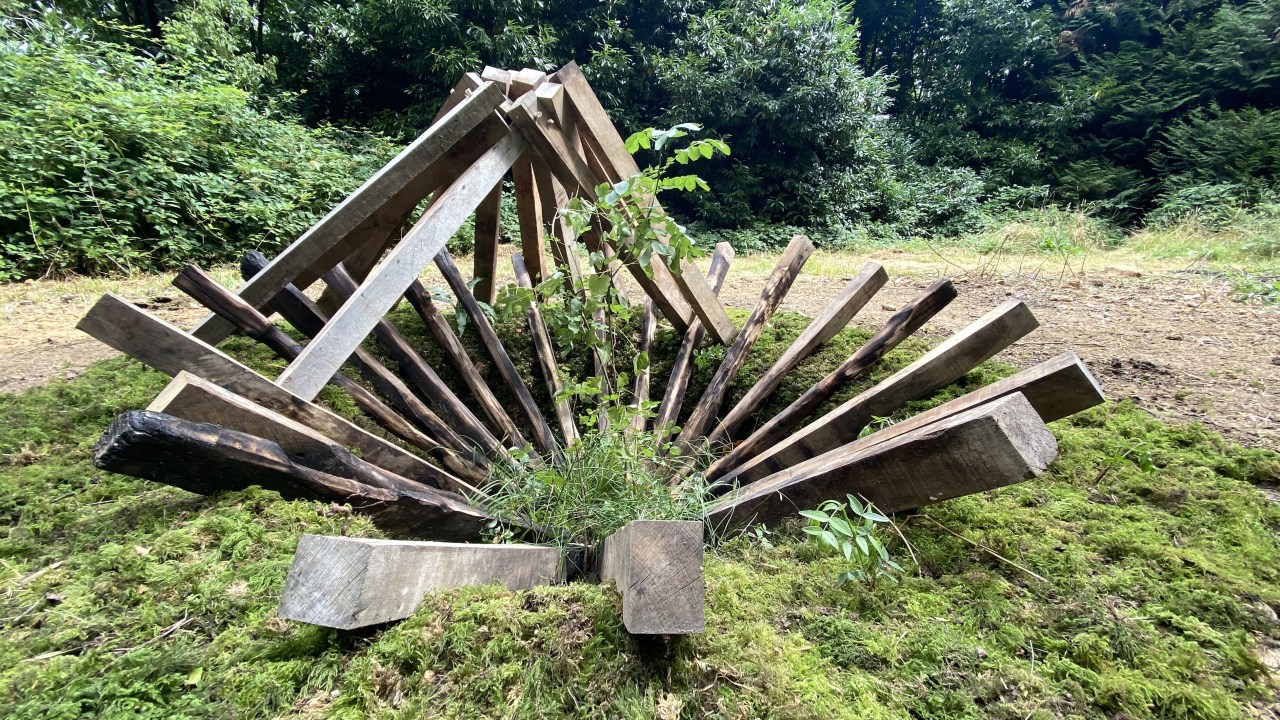
Aven – 2023 – Festival Bellastock, Parc du CAAP (Art center, Architecture and landscape) – Evry-Courcouronnes. 200 x 250 x 100 cm – – Oak planks, moss, maple seedlings, fresne, rosehip, walnut. Aven symbolizes life in the abyss. The Aven project is to reconstruct an ecosystem destroyed for the purposes of a work of art. After destroying a soil, its earth and humus, an ecosystem was transplanted. Aven is a reflection on the notion of Reuse and its process.



© Sara Favriau, Malo Legrand
(english below)
Des madriers qui ont servi à transporter les rails pour la SNCF, ont été donnés à Bellastock, qui a invité Sara Favriau pour créer une oeuvre à partir de ce matériau et le réemployer.
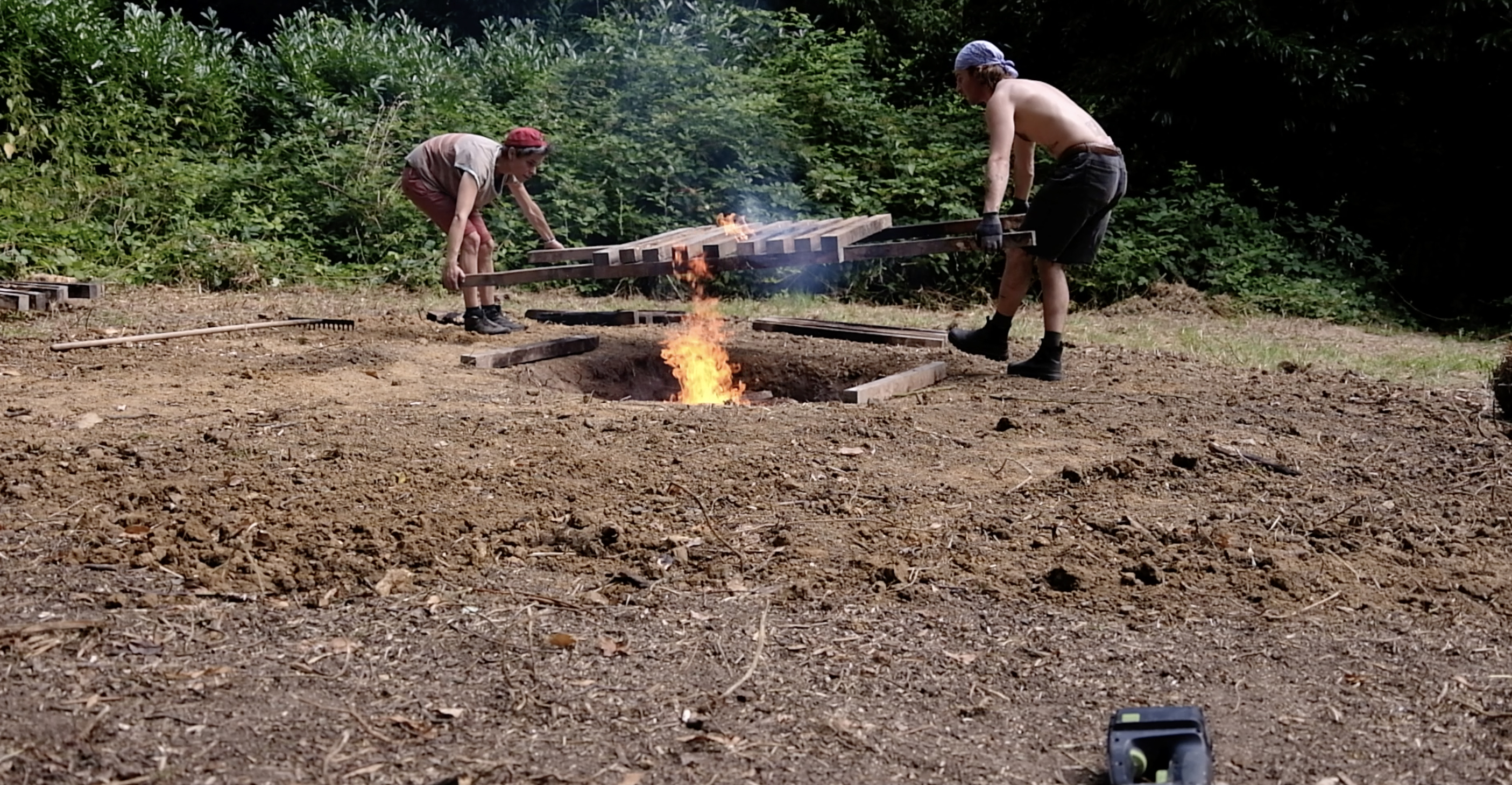
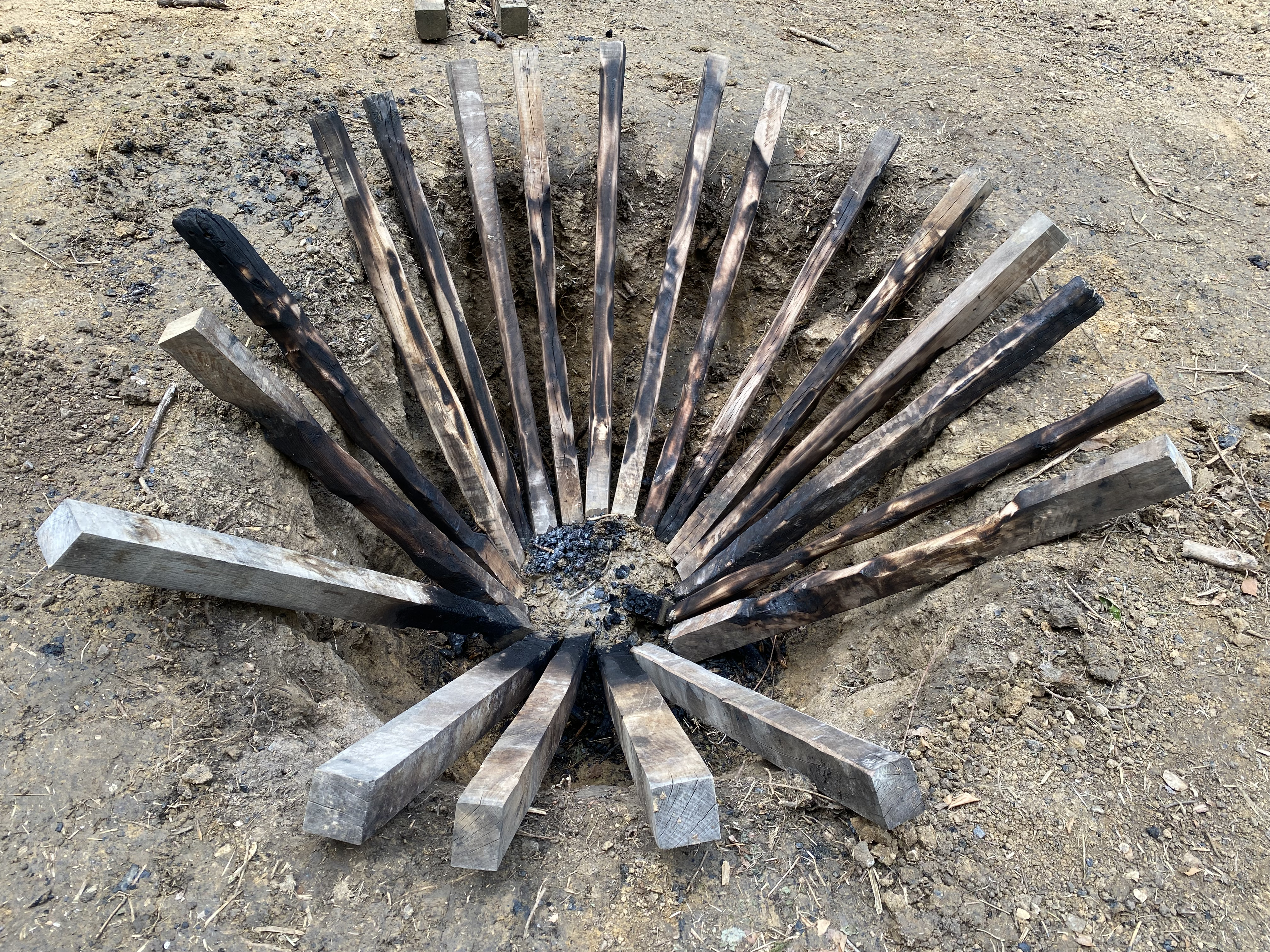
Ce matériau, altéré par l’usage et le temps, a été parasité. Pour réemployer ces madriers, l’artiste a commencé par creuser un trou dans le parc du CAAP, pour y faire un feu. La terre extraite a été répandue autour de cette cavité pour sécuriser l’espace boisé du parc. La création de ce «puit» a permis de brûler le matériau dégradé de la SNCF, dans le but de le «ressusciter». Une cuisson au feu des madriers a été ensuite effectuée, inspirée de deux méthodes : le Shou Sugi Ban et l’archéologie expérimentale (creuser une pirogue par le feu). Un procédé de brûlage datant du Moyen-âge et du néolithique qui traite, creuse le bois, tout en l’ignifugeant, l’étanchéifiant ; une opération de «cristallisation» à priori sans dommage.
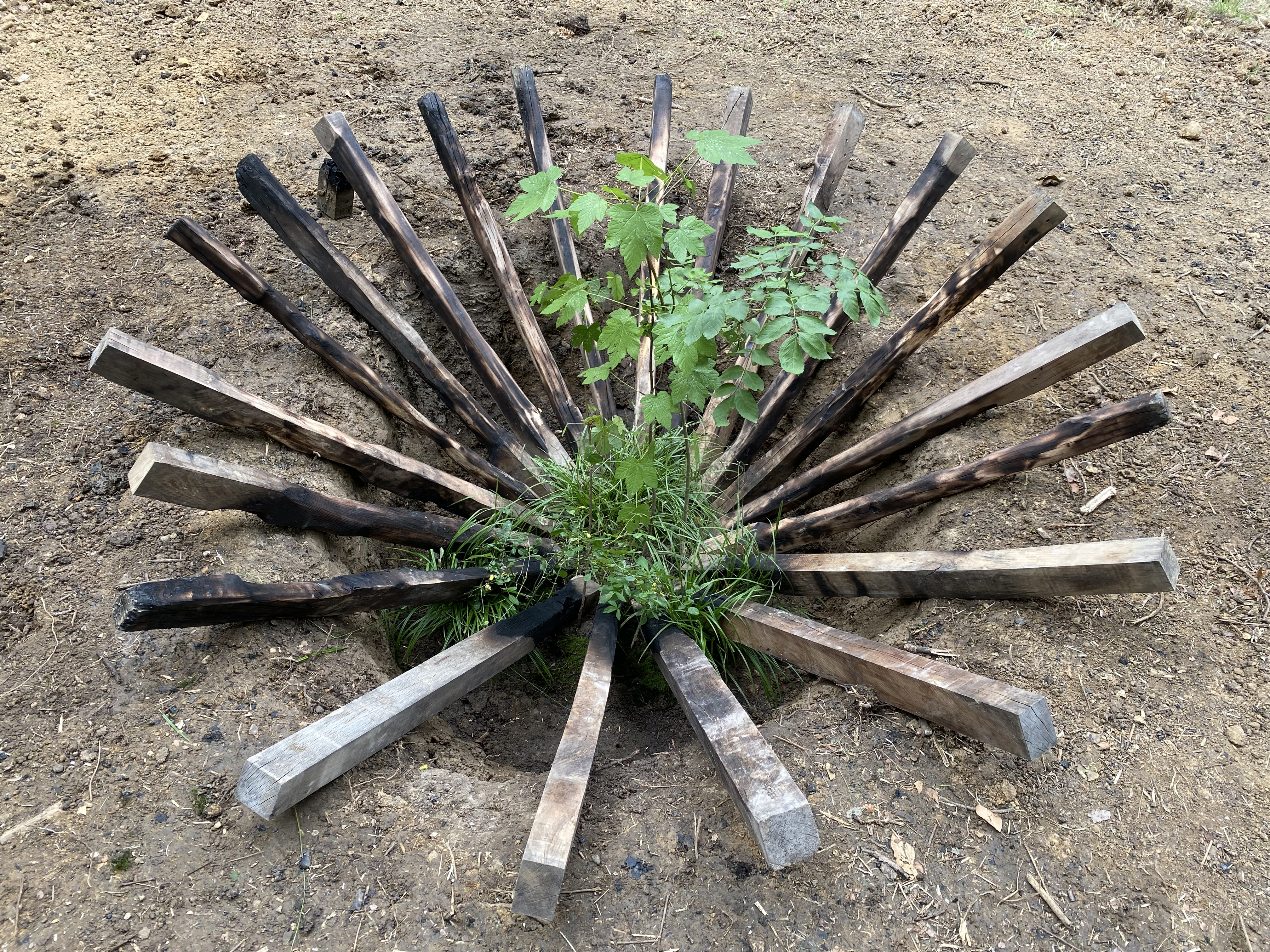
Pourtant, cette quête du réemploi par la métamorphose d’un matériau (brûlage), qui est aussi un désir de contrôle sur les cycles naturels de décomposition, a des conséquences. L’écosystème où ce puit a été creusé et sa zone défrichée pour les besoins du feu, ont été détruits. L’artiste a choisi de reconstituer cet écosystème en transplantant celui du sous-bois, situé à quelques mètres. Cette action de réparation, lie cette «résurrection» découlant des besoins de la culture (réemploi des madriers) à celle de la recréation d’une nature dans un trou d’origine humaine.
Les madriers qui ont été transformés (brulés, grattés, taillés), englobent et entourent désormais et ceci de façon pérenne : mousse, jeunes plants d’érable, fresne, églantier, noyer… à présent, nature et culture dans tous les sens du terme, cohabitent ensemble dans le parc du prochain CAAP d’Evry-Courcouronnes.
// English
Logs used to transport rails for the SNCF were donated to Bellastock, who invited Sara Favriau to create a work from this material and reuse it.
This material, altered by use and time, has been parasitized. To reuse the planks, the artist began by digging a hole in the CAAP park, to build a fire. The soil extracted was spread around this cavity to secure the wooded area of the park. The creation of this « well » made it possible to burn the degraded SNCF material, with the aim of « resurrecting » it. The logs were then fired, inspired by two methods: Shou Sugi Ban and experimental archaeology (digging a dugout canoe by fire). A burning process dating back to the Middle Ages and the Neolithic period, which treats and hollows out the wood, while at the same time fireproofing and waterproofing it; a « crystallization » operation which, on the face of it, is harmless.
Yet this quest for reuse through the metamorphosis of a material (burning), which is also a desire to control natural cycles of decomposition, has consequences. The ecosystem where the well was dug, and the area cleared for the fire, have been destroyed. The artist has chosen to reconstitute this ecosystem by transplanting that of the undergrowth, located just a few metres away. This action of repair links the « resurrection » resulting from the needs of cultivation (reuse of the planks) to the recreation of nature in a man-made hole.
The transformed planks (burnt, scraped and trimmed) now encompass and surround moss, maple seedlings, fresne, wild rose, walnut… nature and culture, in every sense of the word, now coexist in the grounds of the next Evry-Courcouronnes CAAP.